
When a Victorian heatwave hits, most of us think about the aircon, the pool and keeping the kids cool. Very few of us think about the grey box on the side of the house. Yet summer is when your switchboard works hardest — and when an ageing or overloaded one is most likely to fail.
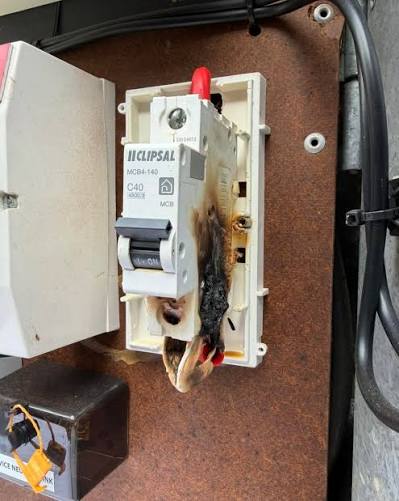
A hot switchboard is not just an inconvenience. It can mean tripping power, damaged appliances and, in the worst cases, an electrical fire.
The good news: the warning signs are usually there well before anything goes wrong, if you know what to look for.
Why switchboards overheat in summer
Your switchboard is the control centre for every circuit in your home. In summer, three things stack up against it:
When a Victorian heatwave hits, most of us think about the aircon, the pool and keeping the kids cool. Very few of us think about the grey box on the side of the house. Yet summer is when your switchboard works hardest — and when an ageing or overloaded one is most likely to fail.
A hot switchboard is not just an inconvenience. It can mean tripping power, damaged appliances and, in the worst cases, an electrical fire. The good news: the warning signs are usually there well before anything goes wrong, if you know what to look for.
Heavier load. Air conditioners, fans, fridges, pool pumps and freezers all run harder and longer. Many homes also charge EVs and run induction cooktops their wiring was never designed for.
- Higher ambient heat. Switchboards are often mounted on west-facing exterior walls or in hot garages. When the box is already sitting in 40°C sun, components have less room to shed the heat they generate.
- Ageing components. Loose connections, corroded terminals and worn-out fuses or breakers create resistance. Resistance creates heat — and heat makes connections looser still.
The result is a switchboard running close to its limits at exactly the time you rely on it most.
Warning signs to watch for
You don’t need to open the switchboard to spot trouble. Look, listen and smell from a safe distance:
- Warmth. The switchboard door or cover feels warm to the touch when the weather isn’t extreme.
- Burning smell. A hot plastic or fishy odour near the board is a red flag. Switch off at the main if it’s safe to do so and call an electrician.
- Buzzing or crackling. A healthy switchboard is silent.
- Discolouration. Brown or black scorch marks around switches, breakers or the panel itself.
- Frequent trips or blown fuses. Especially when the aircon kicks in on a hot afternoon.
- Flickering or dimming lights when large appliances start up.
Any one of these is a reason to book an inspection. Two or more, and it should be treated as urgent.
Which homes are most at risk?
Some switchboards are simply not built for how we live today. Yours deserves a closer look if:
- Your home was built or last rewired 25 or more years ago.
- The board still has ceramic rewireable fuses rather than modern circuit breakers.
- There is no safety switch (RCD), or only one protecting a few circuits.
- You see an old black or asbestos-backed panel, common in homes built before the late 1980s. Never drill, cut or disturb it yourself.
- You’ve added major appliances ducted cooling, solar and batteries, an EV charger, a spa — without upgrading the board.
Older boards were designed for a handful of lights and a few power points. Asking them to handle a modern summer load is where problems begin.
What you can do and what you can’t
In Victoria, all electrical work inside a switchboard must be carried out by a licensed electrician. That still leaves plenty homeowners can do safely:
Safe for you to do
- Spread the load: avoid running the dryer, dishwasher and oven at the same time as the aircon on peak afternoons.
- Keep the area around the switchboard clear of stored items, garden waste and anything flammable.
- Test your safety switches every three months using the “Test” button.
- Shade a sun-exposed board where practical, without blocking access or ventilation.
- Note any warning signs and when they happen — it helps your electrician diagnose faster.
Leave to a licensed electrician
- Removing the cover or touching anything inside the board.
- Replacing fuses with higher-rated ones or “fixing” a breaker that keeps tripping.
- Tightening connections, adding circuits or installing new appliances on existing wiring.
A breaker that keeps tripping is doing its job. Treat it as a message, not a nuisance.
Why a switchboard upgrade is worth it
If your board is showing its age, an upgrade before summer is one of the smartest safety investments you can make for your home:
- Modern circuit breakers that trip cleanly and reset easily — no more fiddling with fuse wire in the dark.
- Safety switches (RCDs) on every circuit, cutting power in a fraction of a second if current leaks to earth, including through a person.
- Capacity for today’s home, with room for aircon, solar, batteries and EV charging.
- Peace of mind that the box running your home is cool, compliant and fit for purpose.
An upgrade is usually completed in a day, and your electrician will issue a Certificate of Electrical Safety for the work.
Get your switchboard summer-ready with YEP
Don’t wait for the first 40-degree day to find out your switchboard can’t cope. The team at Your Electrical Partner will inspect your board, test your safety switches and give you a clear, honest recommendation, whether that’s a simple fix or a full upgrade.
Book your summer switchboard check today and head into the hot months knowing the heart of your home’s electrical system is safe.
📞 Call: 1300 GET YEP (1300 438 937)
📧 Email: info.yepservices@gmail.com
📍 Based in: Benalla, Victoria, 3672