

How often should workplace appliances be tested and tagged in Victoria? Frequencies, AS/NZS 3760 explained, and how to stay compliant.

Commercial Electrician in Melbourne: 7 Things to check before you hire.
Hiring a commercial electrician in Melbourne? Check licences, insurance, compliance paperwork and after-hours support before you sign.
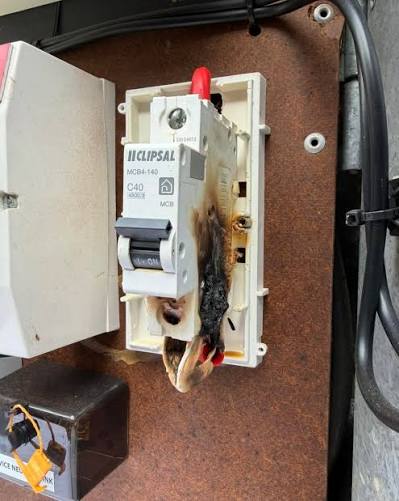
Hot switchboards: the summer risk hiding in your home
When a Victorian heatwave hits, most of us think about the aircon, the pool and keeping the kids cool. Very few of us think about the grey box on the side of the house.

Storm season is coming. Is your business protected from power surges?
Summer storms bring lightning, outages and power surges. Here’s how Victorian businesses can protect equipment, data and operations before storm season hits. Every summer, storms roll across regional Victoria. Most of the time, the lights flicker and come back on. But sometimes a split-second surge does damage you only discover the next morning: a dead POS system, a fried PLC, a solar inverter that won’t restart, or a coolroom controller that’s lost its settings. The good news is that most surge damage is preventable, and now is the right time to sort it. What causes a power surge? A surge is a short spike in voltage, far above what your equipment is designed to handle. The most common causes are: Lightning strikes on or near power lines, which can send a surge kilometres down the network Power restoration after an outage, when the supply comes back on all at once Grid switching and faults, especially during storms when lines come down Large equipment on your own site, such as motors, compressors and welders starting and stopping You can’t stop a storm, but you can control how much of that spike reaches your equipment. What’s most at risk Modern businesses run on electronics that are sensitive to surges: POS systems, computers, servers and network equipment PLCs, variable speed drives and control systems Solar inverters and battery systems Refrigeration controllers and coolroom monitoring CCTV, alarms and access control Replacing the hardware is often the smaller cost. The bigger cost is the downtime, lost stock and lost data while you wait for parts and a technician. How layered surge protection works The most reliable approach is protection in layers: At the main switchboard. A surge protection device (SPD) catches large incoming surges before they spread through your site. At distribution boards. Additional SPDs protect sub-boards feeding sensitive areas such as a plant room, server cabinet or kitchen. At the equipment. Quality surge-protected power boards or UPS units protect individual critical items, such as a server or POS terminal. A licensed electrician can assess your site and recommend the right devices for each layer. Remember that surge protectors don’t last forever. Many have a status indicator, and one that has absorbed a big surge may need replacing. Your pre-storm checklist Check whether your main switchboard has surge protection, and that it’s still working Identify your critical equipment and how it’s protected Put servers, POS and network gear on a UPS so they shut down safely in an outage Back up data and controller settings Know how to safely restart equipment after an outage, and who to call if it won’t Get storm-ready with YEP Our licensed electricians can inspect your switchboard, recommend surge protection that suits your site and install it before storm season peaks. We work with commercial, industrial and agricultural sites across Victoria. 📞 Call: 1300 GET YEP (1300 438 937) 📧 Email: info.yepservices@gmail.com 📍 Based in: Benalla, Victoria, 3672 👉 Get in touch with YEP to discuss your renewable energy project.
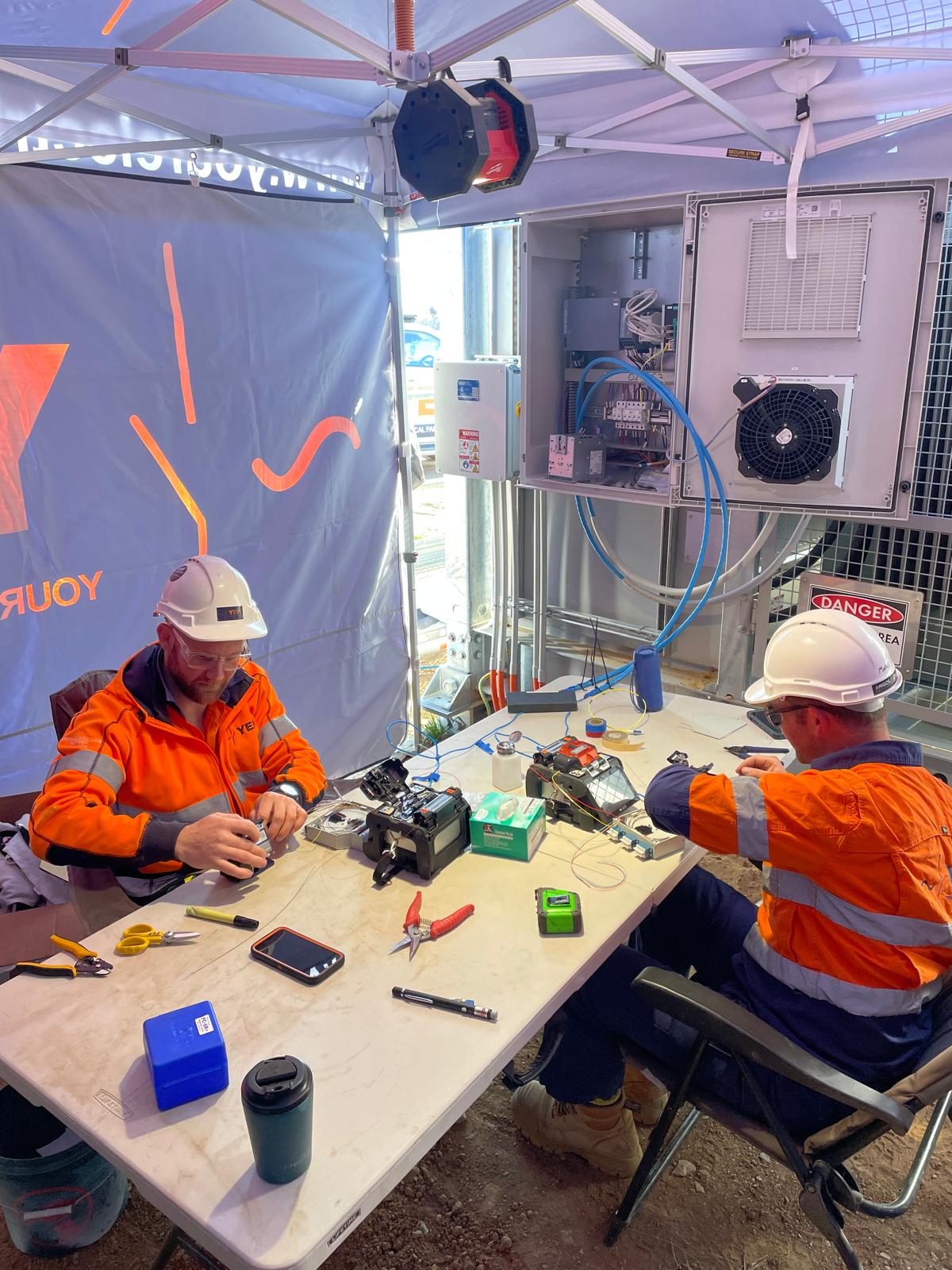
The YEP guide to cleaner, faster fibre terminations
In this guide, we share what “clean and fast” termination actually looks like in practice, and why it matters for the long-term performance of your network.