
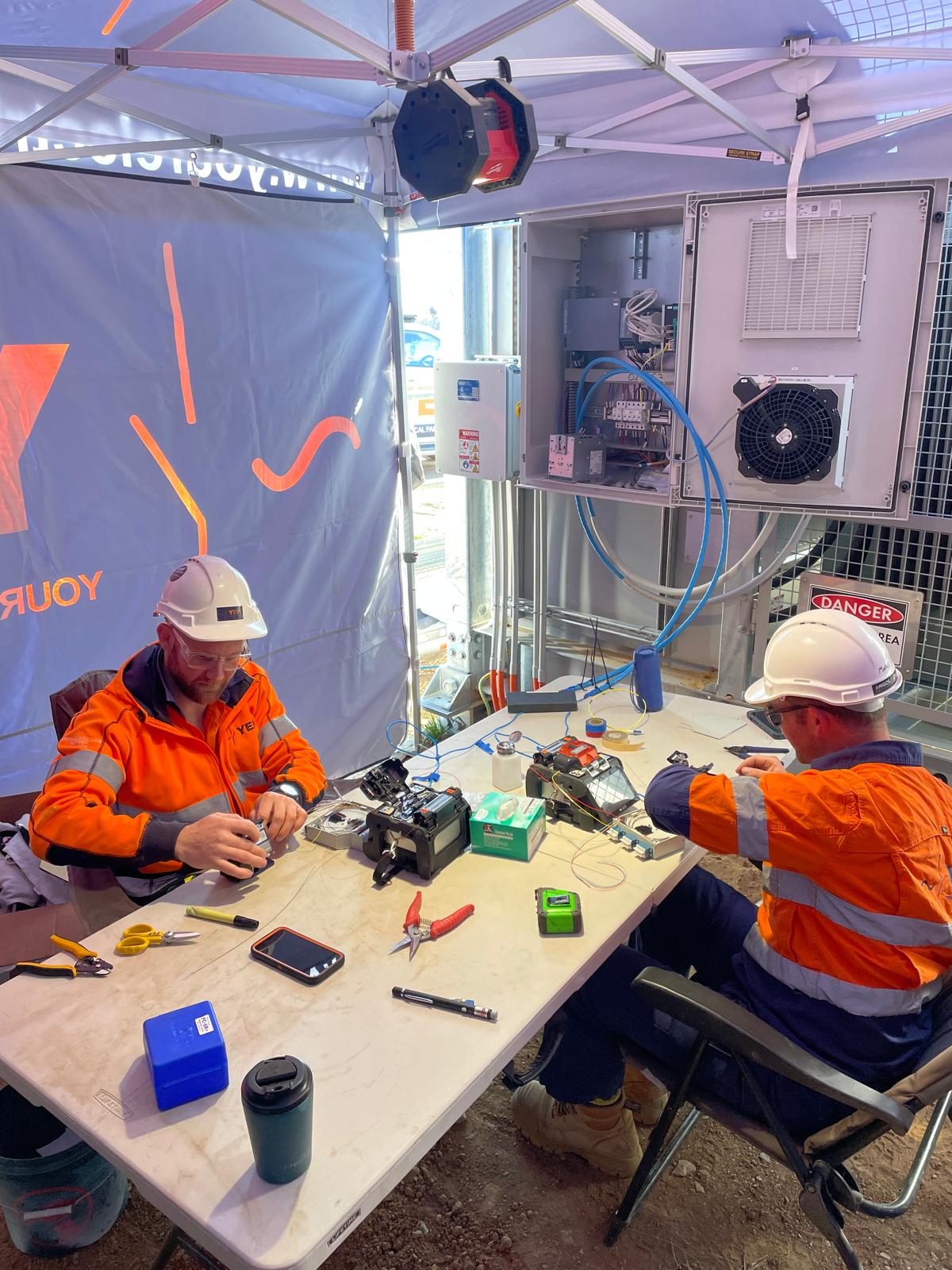
Fibre optic networks are only as good as their weakest connection point and more often than not, that weak point comes down to termination quality. A rushed or poorly executed termination can mean signal loss, intermittent faults, and a network that never quite performs the way it should, no matter how good the cable itself is.
At YEP, precision fibre optic termination, certification, and data infrastructure work is one of our core specialties. In this guide, we share what “clean and fast” termination actually looks like in practice, and why it matters for the long-term performance of your network.
Why termination quality makes or breaks a network
Every fibre optic link is only as strong as its connectors and splices. Termination is the point where light either passes through cleanly, or doesn’t. Even microscopic imperfections at a termination point can cause:
- Signal attenuation: a gradual weakening of the light signal as it travels through the network
- Reflectance issues: light bouncing back toward the source, degrading signal quality
- Intermittent faults: connections that work fine one day and drop out the next, often the hardest kind of fault to diagnose
- Reduced network lifespan: poor terminations put unnecessary stress on connectors and splice points over time
Get termination right, and a fibre network can reliably perform for decades. Get it wrong, and you’re signing up for ongoing troubleshooting, unplanned outages, and callbacks.
What “clean” termination really means
A clean termination isn’t just about a tidy-looking cable. It’s about precision at a microscopic level. Fibre optic strands are typically thinner than a human hair, so even the smallest amount of dust, an imperfect cleave angle, or a poorly polished end face can introduce loss into the system.
Clean termination practice includes:
- Proper cable preparation: careful stripping and handling to avoid micro-fractures in the fibre
- Precise cleaving: a clean, perpendicular cut is essential for a low-loss connection
- Correct connector selection: LC, SC, ST, or MTP/MPO connectors chosen to match the network’s requirements, not just what’s on hand
- End-face inspection: checking every termination under magnification before it goes into service
- Dust and contamination control: keeping connectors capped and clean until the moment they’re mated
None of this is glamorous work, but it’s exactly what separates a network that performs reliably from one that generates support tickets for years to come.
What “fast” actually means (and doesn’t)
Speed matters on any project but in fibre termination, “fast” should never come at the expense of quality. The real efficiency gains come from:
- Right-first-time workmanship: getting it right the first time is always faster than reworking a failed termination later
- Proper planning and cable management: organised runs and clear labelling save hours during testing and commissioning
- Experienced technicians: skilled hands with the right tools consistently outperform less experienced crews, both in speed and in quality
- The right test equipment on hand: verifying as you go, rather than discovering problems at the end of a project
A termination job that looks fast because corners were cut isn’t actually fast. It just moves the delay further down the track, usually in the form of a fault call weeks or months later.
Testing and Certification: The non-negotiable final step
No fibre termination project is complete without proper testing and certification. This typically involves tools such as OTDRs (Optical Time-Domain Reflectometers) and optical power meters to confirm that every link meets performance standards before it’s signed off. Skipping or rushing this step is one of the most common and costly mistakes in fibre projects.
Remember: Certification isn’t just paperwork; it’s the evidence that a network will perform as intended, and it protects everyone involved if an issue arises down the track.
Common fibre termination mistakes to avoid
- Handling connectors without keeping end faces capped and clean
- Using the wrong connector type for the application
- Skipping end-face inspection under magnification
- Rushing cleave and polish steps to save time
- Failing to test and certify every link before commissioning
- Poor cable management leading to strain on terminations over time
If any of these sound familiar from past projects, it’s worth having your network reviewed before small issues become recurring problems.
Fibre infrastructure is designed to last decades but only if the termination work behind it holds up. Investing in proper preparation, precision workmanship, and thorough testing up front costs far less than chasing intermittent faults across a live network later.
Talk to YEP about your fibre network
At YEP (Your Electrical Partner), we deliver precision fibre optic termination, certification, and data infrastructure for clients across regional and metropolitan Victoria. Whether you’re planning a new data network or need an existing one reviewed, our team brings the experience and attention to detail that clean, reliable fibre networks depend on.
📞 Call: 1300 GET YEP (1300 438 937)
📧 Email: info.yepservices@gmail.com
📍 Based in: Benalla, Victoria, 3672
👉 Get in touch with YEP to discuss your fibre optic termination and data network project.